
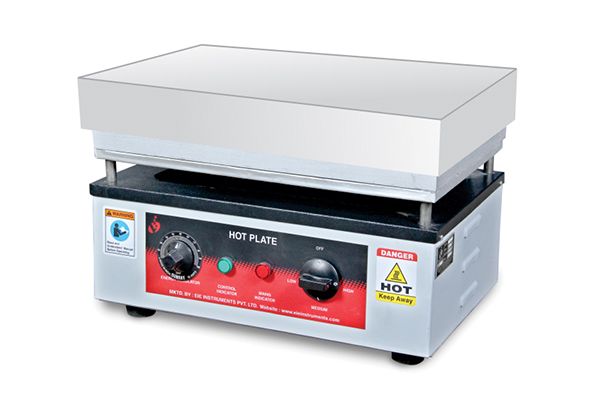
Applications :
A laboratory sand bath is a, generally, electrically heated container filled with sand used for uniform, gradual heating of glassware, such as flasks or beakers, without direct heat contact. Offering superior temperature stability, they are ideal for drying, distilling, and heating sensitive samples upto 300 °C
Salient Features :
- Aesthetic outer appearance
- Heated by open type heaters placed at the bottom of the inner chamber
- 3 stage heat control switch for selection of LOW, MEDIUM or HIGH heat
- Fully air ventilated lower body for minimum heat, even when the top plate is fully heated
- Uniform heating throughout the bottom Plate
Optional Accessories At extra cost :
- Forced air exhaust for continuous operation
- Thermal gloves for thermal protection.
Notes:
- Thermal Inertia: Sand baths stay hot for a significant amount of time after the heater is turned off.
- Slow Warm-up: Sand has low thermal conductivity, so it can take 90 minutes or longer to reach a stable high temperature.
- High Thermal Inertia: Once heated to its maximum capacity, the sand will remain dangerously hot for a long time after the power is cut.
- Cleanliness: Ensure the sand is dry and free of organic contaminants, which could smoke or ignite at these temperatures
- Clean, dry silica or quartz sand is recommended. (Sand has to be arranged by the user)
- Bottom vs. Surface: Sand is an excellent insulator, which creates a significant temperature difference between the bottom and the surface
- The sand at the very bottom of the bath may reach 300 °C while the surface remains significantly cooler .
- Vessel Placement: To achieve 300 °C heating, the reaction vessel must be buried deep into the sand, near the heating source